


What happens when a student who dislikes her major, has zero technical background, and no clear direction decides to stop waiting and start doing?
In Mika Hayashi's case, the answer is: everything changes.
Over the course of eight months, this Tourism Science student from Tokyo Metropolitan University completed 12 real-world industry AI projects, spent six weeks doing cross-disciplinary research in Boston, discovered her true passion in psychology and neuroscience, and ultimately transferred from Tokyo to Boston to pursue it.
This is not a hypothetical success story. It is a blueprint for how exploration — systematic, hands-on, and brave — can transform uncertainty into direction.
The Starting Point: Zero Experience, Zero Direction
Mika Hayashi grew up in Japan, born to Chinese parents. On paper, she looked like she had it together — a second-year Tourism Science student at Tokyo Metropolitan University, a part-time model, even a title holder as "International Tourism Miss." But beneath the surface, she carried a quiet frustration that many students know all too well: she didn't like her major, and she had no idea what she actually wanted to do instead.
Her resume at the time told the whole story:
Major: Tourism Science — completely unrelated to technology
Tech experience: Zero. AI experience: Zero. Programming: Zero
Skills: Word, Excel, and Canva
Direction: Completely uncertain
She wasn't alone in this. For countless students, choosing a major they don't enjoy — while feeling unqualified to pivot toward something like AI because they're "not an engineering type" — becomes paralyzing. The fear of making the wrong move leads to making no move at all. Mika recognized this trap and chose a different path.
"Don't wait until you've figured it out. Start doing first."
12 Projects, 12 Doors Opened
In December 2024, Mika joined BlendED's AI+X program. Over the next eight months, she completed 12 enterprise-level industry projects — each one in a different field, with a different team, tackling a different real-world problem.
The breadth was remarkable. Over eight months, she completed 12 enterprise-level projects spanning virtually every major industry:
Meta Project — AI-driven social media analytics
BCG Project — Corporate strategy consulting
Headspace Project — Applied psychology with human data
Shell Project — AI for energy and sustainability
Deloitte Project — Innovation management and strategic leadership
AI in Hardware — AI in hardware systems
Amazon Project — Operations strategy and supply chain analysis
J.P. Morgan Project — Machine learning in quantitative finance
Tableau Project — Data visualization for social impact
Novo Nordisk Project — Computer vision in biotech
Headspace Project (Advanced) — Applied psychology, on-campus deep dive
Boston Dynamics Project — AI and robotics for robot manipulation
From finance to consulting, from psychology to robotics — twelve projects that transformed all her uncertainty into real, hands-on exploration. This was not résumé-padding. Each project meant collaborating with industry experts and peers from around the world to solve genuine problems. As BlendED describes it, she turned all her "uncertainty" into real exploration.
One Summer, Six Weeks in Boston
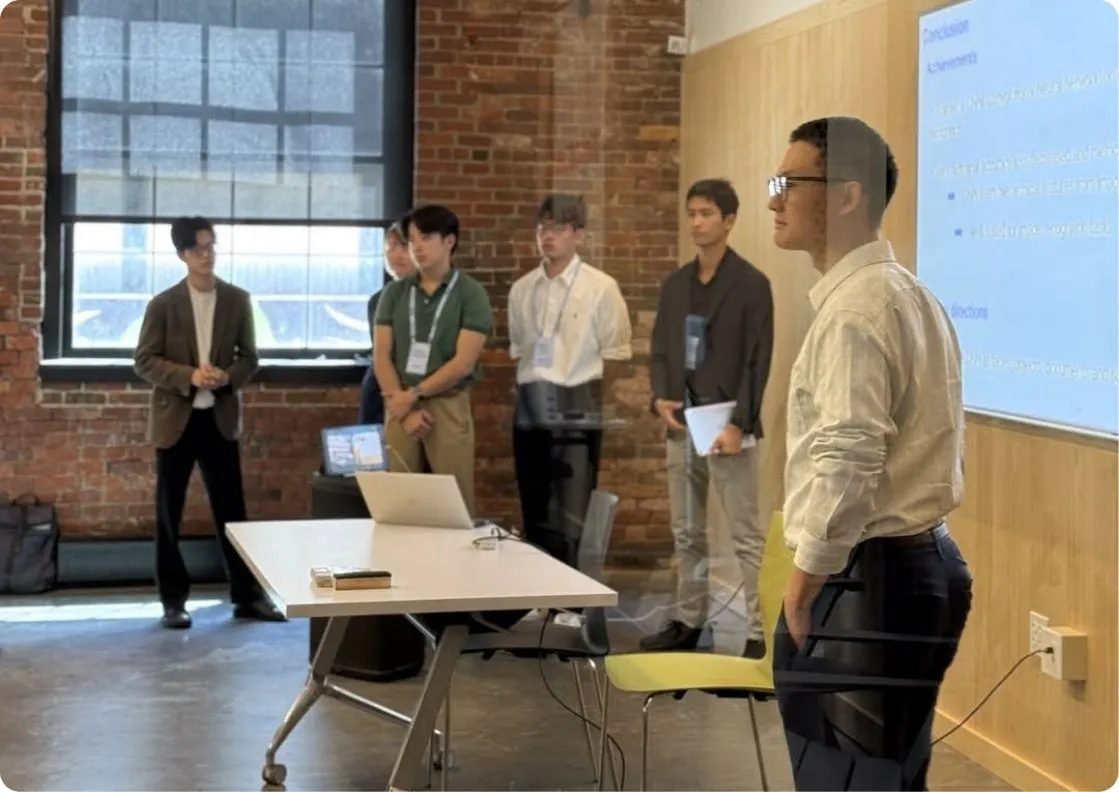
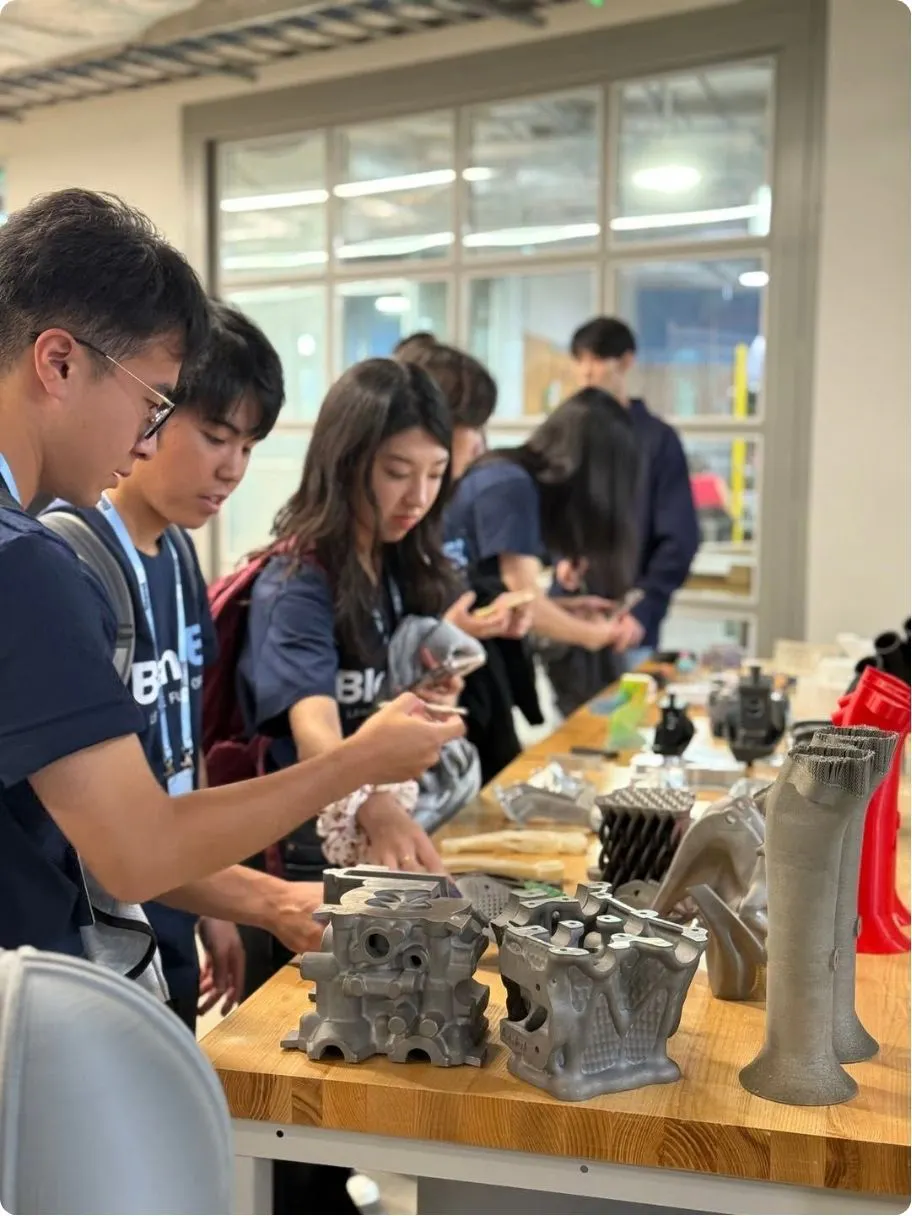
In the summer of 2025, Mika took things further. She flew to Boston and participated consecutively in all three sessions of BlendED's on-campus experience — six weeks in total. She wasn't there to observe. She was there to do real cross-disciplinary research.
During those six weeks, she completed four on-campus projects that illustrated just how far she had traveled from her tourism science roots:
Tourism Route Optimization — Designed an algorithm to generate optimal 24-hour New York City itineraries, applying tourism science through the lens of linear programming
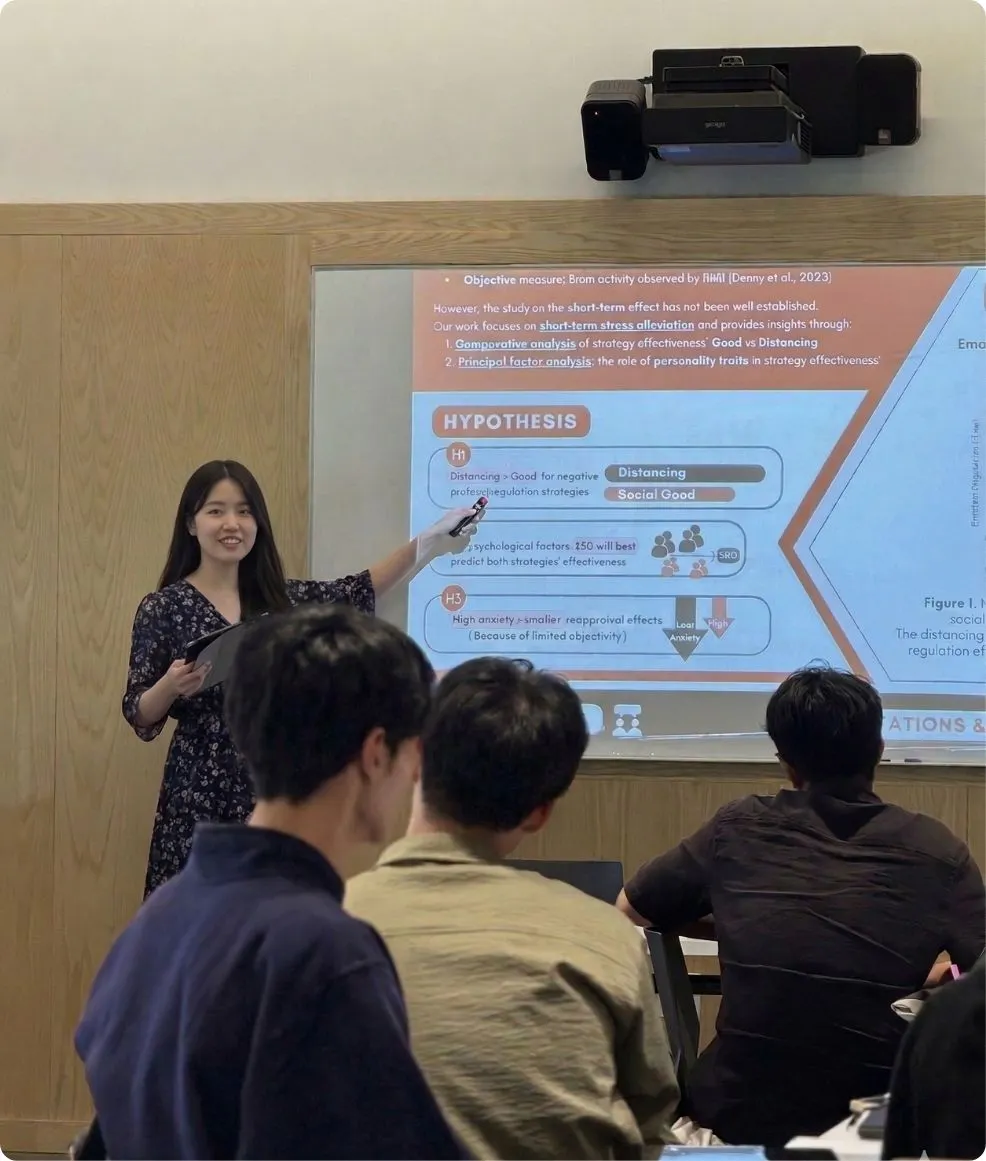
Emotion Regulation Strategy Research — Conducted a psychology study comparing "objective distancing" versus "positive reappraisal" as emotion regulation methods
Bitcoin Price Prediction — Built a prediction model combining time-series analysis with NLP-based social media sentiment analysis
Retinal Vessel Segmentation — Trained a vessel detection model using self-supervised learning on 35,000 unlabeled medical images
A tourism major student, doing medical imaging, financial forecasting, and psychology research in Boston. This is the power of exploration.
The Discovery: It Was the Brain All Along
After completing 12 vastly different projects, something clicked for Mika. She found herself most drawn to one thread running beneath all the domains she had explored — finance, consulting, energy, robotics, biotech, psychology. That thread led her to the same place every time: the brain, and the foundations of human cognition.
In her own words:
"Through exploring such diverse fields, I realized I wanted to dive deeper into the brain, the foundation underlying the advancement of all these disciplines. That's what led me to switch my focus to psychology and neuroscience."
This was not a snap decision made on a whim. It was a conclusion earned through twelve real projects across twelve different industries. Her choice wasn't based on vague interest — it was grounded in direct experience. She had done the work, verified each direction firsthand, and arrived at a clear answer.
This is the difference between exploration and confusion. Exploration is systematic. Confusion is aimless.
The Bold Move: Tokyo ✈️ to Boston
Finding her direction gave Mika the clarity to do something most people wouldn't dare. In winter 2026, she officially transferred from Tokyo Metropolitan University to Boston, simultaneously changing both her country and her field of study — from Tourism Management to Psychology and Neuroscience.
Changing countries is already a significant act of courage. Changing majors on top of that is even harder. Doing both at the same time requires genuine clarity and real courage. Mika had both. She got there through four concrete steps:
Broad exploration across 12 projects to confirm her true interest
Six weeks on-campus in Boston to build a genuine professional network
A project portfolio that demonstrated her cross-disciplinary capabilities
The transfer itself in winter 2026, stepping fully into Psychology and Neuroscience
"This was not impulsive. It was a clear choice built on a foundation of real exploration."
Where She Is Now
The transformation is striking when laid out side by side:
Before
After
Major
Tourism Science
Psychology & Neuroscience
Location
Tokyo
Boston
Tech Experience
None
12 industry real-world projects
AI Experience
None
ML / CV / NLP / Self-Supervised Learning
Direction
None
AI + Psychology & Neuroscience
Mindset
None
Clear, determined, already in action
And she keeps moving forward. She was invited back to BlendED's holiday on-campus event after transferring. She is about to join a US Physical AI startup. She remains an active member of the GTC community, attending events in both Tokyo and Boston. Her focus continues to deepen at the intersection of robotics, artificial intelligence, and cognitive science.
Why This Story Matters
Mika's journey speaks directly to a feeling that is far more common than most people admit:
"I don't know what I want to do." "I'm interested in AI but I'm not a science or engineering student." "I feel like my major is wrong but I don't know where to go." "I'm afraid of making the wrong choice, so I keep waiting."
Her story offers three clear lessons:
1. You don't need to figure it out before you start. Direction comes from doing, not thinking. Mika needed 12 projects to find hers.
2. Your background is not a barrier. A tourism major with zero technical experience completed medical imaging, quantitative finance, and robotics projects.
3. Action beats waiting. Being afraid of making the wrong choice is understandable. But the biggest mistake is doing nothing at all.
Mika didn't wait until she had the perfect plan. She started exploring, let the work reveal her direction, and then had the courage to follow it — all the way from Tokyo to Boston.
"You don't need to know your direction first. You need to start exploring first."