


Good grades alone don't open doors anymore. Jessie Chang knew this better than most.
A first-year Computer Science student at the National University of Singapore, PSC full scholarship recipient, GPA 4.77 — she had everything a strong student is supposed to have. And yet, when she looked at her resume honestly, she saw the same gap that quietly haunts thousands of high-achieving CS students: zero AI/ML experience, zero research, zero recommendation letters.
Just one internship in server operations. Nothing close to the field she actually wanted to enter.
In just seven months, she turned every one of those zeros into something real — 7 PBL projects, 2 research projects with Novartis/MIT and Stanford mentors, 7 genuine recommendation letters, and a 6-month remote internship offer from a Harvard/MIT-founded Health Tech startup backed by millions in Series A funding.
This is not someone else's story. It is a replicable path.
The Starting Point: Strong on Paper, Missing the Layer That Matters
Jessie arrived at BlendED with credentials most students would envy. PSC full scholarship. GPA 4.77. Solid programming skills in Python, JavaScript, and Java.
But her resume told a more honest story:
Experience: 1 internship — server operations, not AI
AI/ML experience: Zero
Research: Zero
Recommendation letters: Zero
This is actually the reality for the majority of students who want to enter AI. Good grades, but nothing AI-related on the resume. An interest in the field, but no clear path in. Short-term projects that admissions officers and HR don't take seriously. The credentials look fine — but that critical layer of genuine industry experience is missing.
Jessie's story is about how she filled every one of those gaps — not by waiting, but by doing.
7 Projects in 7 Months: From Zero to AI + Biotech
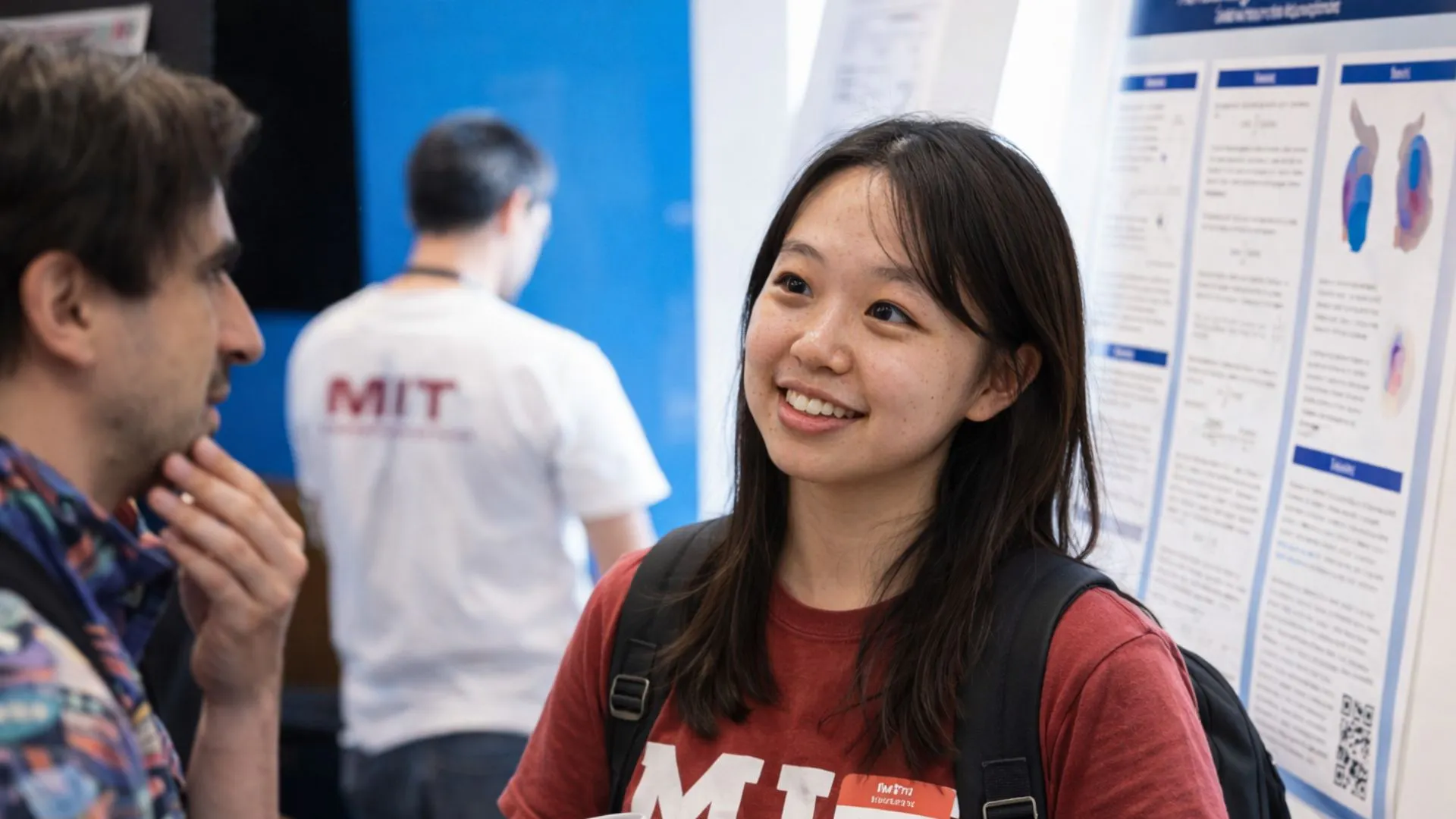
In April 2025, Jessie joined BlendED's AI+X Program. By November, she had completed all 7 projects — each one a real collaboration with industry experts and global peers.
J.P. Morgan (Apr–Jun 2025) — Machine learning in quantitative finance
Genentech (May–Jul 2025) — Quantitative analysis in biotech
MIT xPRO (Jul–Aug 2025) — ML, modeling & simulation
On-Campus Boston (Aug 2025) — Summer research experience at MIT
Tableau (Aug 2025) — Visual data science, on-campus
Novo Nordisk (Aug 2025) — AI computer vision × biotech
Hugging Face (Sep–Nov 2025) — AI natural language processing
Through this process, a clear direction emerged — not because someone told her what to choose, but because she had done enough real work across enough domains to know with certainty.
"AI + Biotech & Healthcare. From finance to NLP to biotech, I clarified my focus through broad exploration. Not 'I'm interested in this' — but 'I've done it, and I know this is the direction I want.'"
Research That Goes Deeper: Recommendation Letters That Actually Mean Something
Beyond the PBL projects, Jessie entered two mentor-guided research projects — and earned recommendation letters that are categorically different from anything a standard academic program produces.
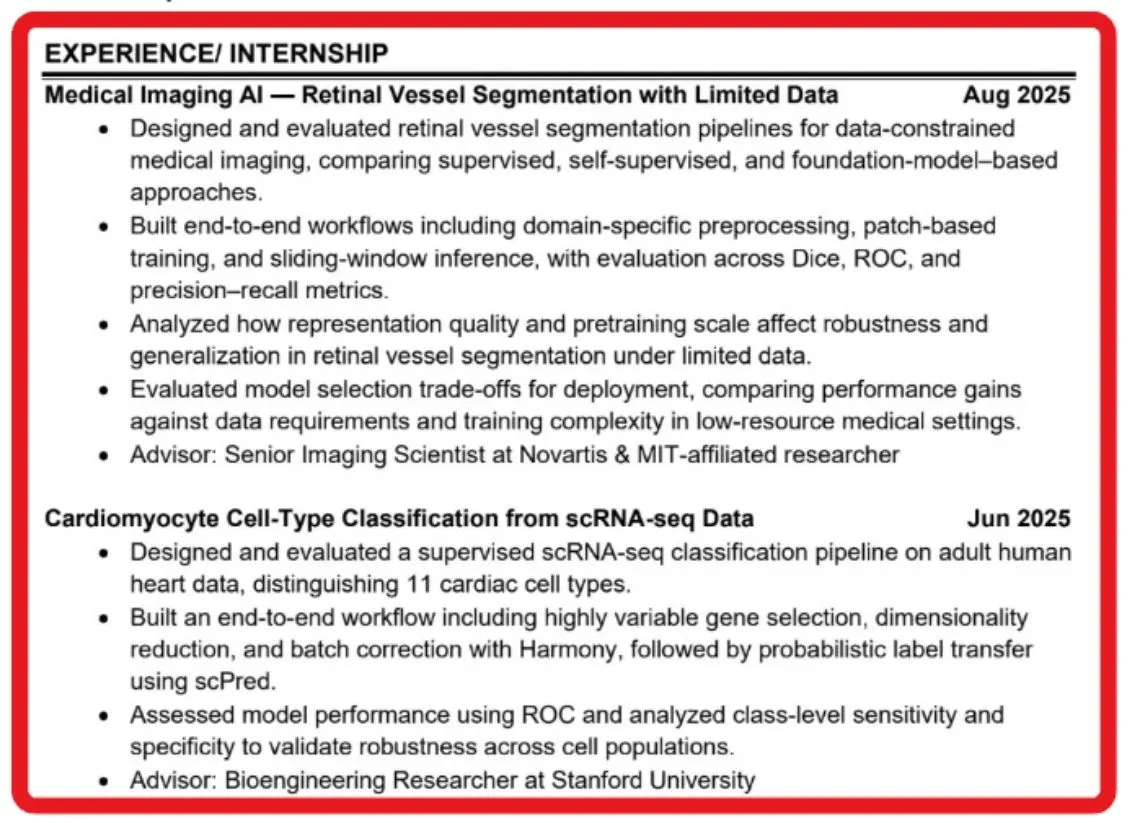
Research Project 1 — Medical Imaging AI: Retinal Vessel Segmentation with Limited Data
Working under a Senior Imaging Scientist at Novartis and an MIT-affiliated researcher, Jessie designed a retinal vessel segmentation pipeline comparing three classes of methods, and evaluated how pretraining scale affects robustness and generalization. The result was a recommendation letter covering her research capability and independent thinking.
Research Project 2 — Cardiomyocyte Cell-Type Classification from scRNA-seq Data
Under a Bioengineering Researcher at Stanford University, she designed a scRNA-seq classification pipeline to distinguish 11 cardiac cell types, incorporating Harmony batch correction and scPred probabilistic label transfer. This letter covered her teamwork and learning ability.
What makes these letters different?
They are not templated "this student performed well" assessments. They are specific capability evaluations based on weeks of genuine, substantive collaboration. Admissions officers and HR professionals can tell the difference — and they do.
The Resume, Before and After
BlendED helped Jessie rebuild her resume from the ground up — converting project experience into verifiable evidence of real capability.
Before
After
Experience
1 internship (non-AI)
7 PBL + 2 research + 1 internship
Technical skills
Python, JS, Java
+ PyTorch, OpenCV, scikit-learn, C, MATLAB
AI/ML projects
None
3 deep-focus projects
Research
None
Novartis/MIT + Stanford mentors
Recommendation letters
None
7 (based on real collaboration)
Industry validation
None
Harvard/MIT-backed startup
Direction
Unclear
AI + Biotech & Smart Healthcare
The shift is not just in what the resume lists — it is in what it proves:
"I participated" → "I can demonstrate it"
"Certificate + recommendation letter" → "Capability + evidence + industry recognition"
"Learning experience" → "Real deliverable"
The Internship: A Harvard Startup Chose Her
This is where Jessie's story moves beyond impressive credentials into something genuinely rare for a first-year student: a real internship at a real company, matched by BlendED based on demonstrated capability.
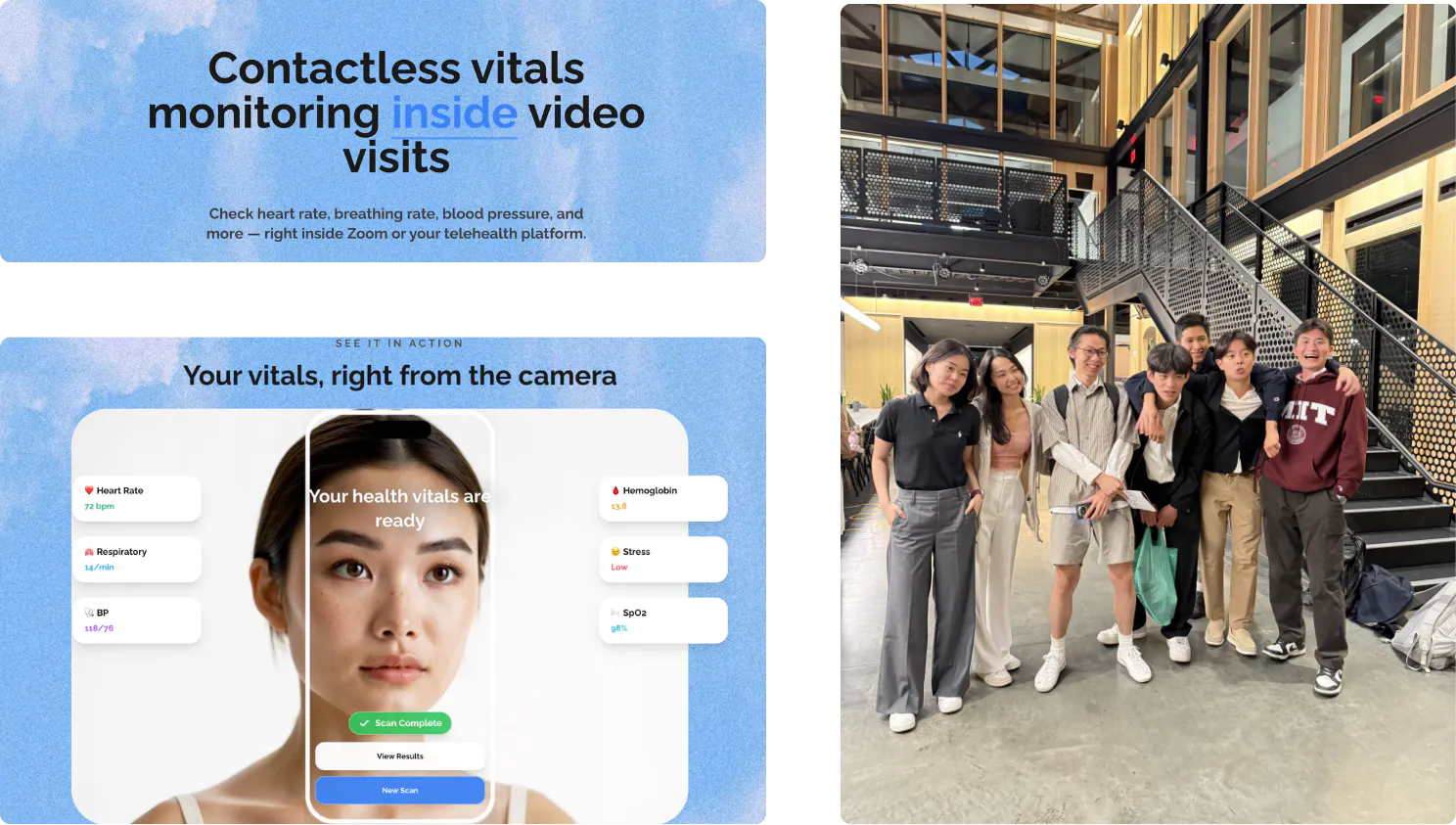
Based on the Computer Vision work Jessie had done throughout her PBL projects, BlendED matched her to a Health Tech startup founded by Harvard and MIT graduates — a company building contactless health monitoring technology that checks heart rate, breathing rate, and blood pressure directly through video calls. The company's CEO personally reviewed student profiles and selected Jessie.
Her 6-month project: using smartphone cameras to estimate human BMI.
The scope was serious:
Full end-to-end CV pipeline from data collection to model deployment
Human segmentation, keypoint detection, and BMI regression model training
Opportunity to co-publish findings with Harvard and MIT researchers
Final deliverables: a working prototype and a full validation report
How it happened matters as much as the outcome itself. Jessie did not send out a cold application. BlendED proactively matched her profile to the company based on her demonstrated skills. The CEO reviewed the shortlist and chose her. An alignment call followed, and the project launched.
"This is not 'sending your own resume.' BlendED matched her based on what she could actually do."
Why This Story Matters
If you are preparing to apply for graduate school or looking for your first serious role, the landscape has shifted. The competition is no longer about who has done the most projects. It is about who can prove they can actually do the work.
For graduate admissions, the question is not how many projects you listed — it is whether you can demonstrate independent research capability and genuine domain understanding.
For jobs and internships, HR is increasingly focused on what you built and what problem you solved, not where you studied.
For the long term, Industry Validation status is valid for life. Even after graduation, alumni can continue to apply.
Jessie's path makes the logic clear: 7 PBLs → direction established → research + recommendation letters → real industry placement. None of it was accidental. It was the result of a systematic process, applied consistently over seven months.
Start Your Own Path
Jessie started with a 4.77 GPA and zero AI experience. She ended her first year with a 6-month internship at a Harvard/MIT-founded startup, two research projects mentored by scientists from Novartis, MIT, and Stanford, and seven recommendation letters grounded in real collaboration.
The gap between where you are and where you want to be does not close by waiting. It closes by doing — with real projects, real mentors, and real industry exposure.
BlendED's AI+X Program is built to take students from zero AI experience to genuine, industry-validated capability — whether you are a CS student like Jessie, a physics major, a social science student, or anything in between.
👉 Apply Now to the AI+X Program
Submit your application today. After reviewing your submission, the BlendED team will be in touch to guide you through the next steps.
This is not someone else's story. This is a replicable path — and it can start with you.